
By Richard Alexander Ibarra, Vox Populi Press
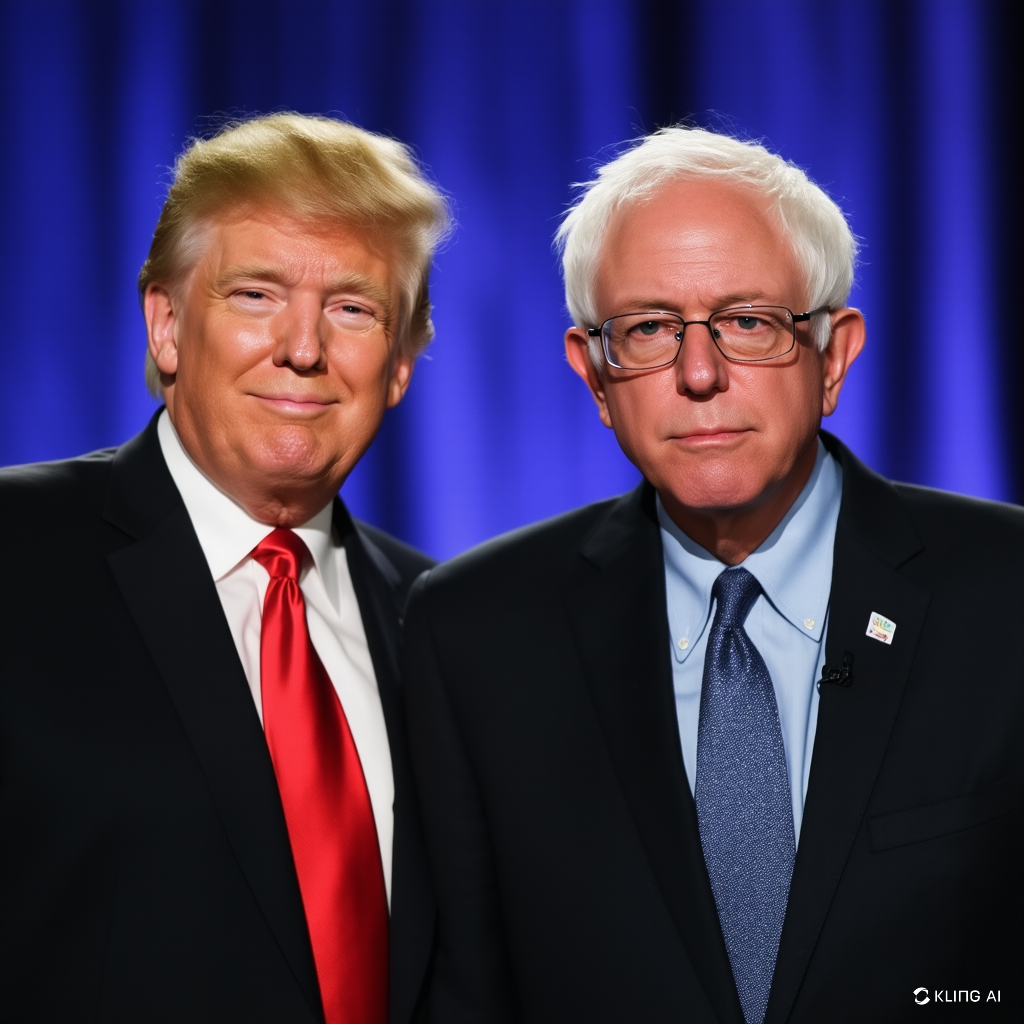
In 2016, the political landscape of the United States experienced a seismic shift. Two figures emerged as unlikely champions of the people: Bernie Sanders and Donald Trump. Though ideologically distant in many ways, their campaigns shared a common thread—a populist appeal that resonated with working-class Americans disillusioned with the political establishment. Their shared focus on corruption, trade deals, and the plight of the working class laid bare the deep divides between the grassroots and the elites within both major political parties.
This moment in history marked the beginning of a realignment that would redefine American politics. For many former Democrats, it was the start of a journey away from the party they once called home and towards a new political identity—one rooted in populist nationalism.
Bernie Sanders: The Grassroots Revolutionary
In 2016, Bernie Sanders galvanized millions of Americans with his message of economic justice and systemic reform. A self-described democratic socialist, Sanders’ appeal transcended ideological labels. He drew tens of thousands to his rallies, speaking passionately about Wall Street’s stranglehold on the economy, the dangers of neoliberal trade deals like NAFTA and the Trans-Pacific Partnership (TPP), and the exploitation of working people by powerful interests.
Sanders’ critique of open-border policies as a “Koch brothers proposal” struck a chord with voters who felt left behind by globalization. He opposed NAFTA and the TPP, arguing that these agreements prioritized corporate profits over American workers. His campaign relied on small-dollar donations, averaging just over $20, showcasing his grassroots support in stark contrast to the well-funded Hillary Clinton machine.
Like Sanders, Trump filled arenas with ordinary Americans eager to hear a message that challenged the status quo.
Yet, despite his popularity among voters, Sanders faced significant opposition from the Democratic National Committee (DNC). Leaked emails revealed the DNC’s concerted efforts to undermine his campaign and ensure Clinton’s nomination. The use of superdelegates and media collusion further cemented the perception that the primary was rigged. For many Sanders supporters, this betrayal was the final straw.
The Parallel Rise of Donald Trump
On the Republican side, Donald Trump’s insurgent campaign upended conventional wisdom. Mocked by the media and dismissed by the GOP establishment, Trump nevertheless captured the imagination of voters with his critiques of globalization, unfair trade deals, and political corruption. Like Sanders, Trump filled arenas with ordinary Americans eager to hear a message that challenged the status quo.
Trump’s denunciation of NAFTA, the TPP, and unchecked immigration echoed Sanders’ rhetoric. Both candidates highlighted the economic and social costs of policies championed by the neoliberal and neoconservative elites. While Sanders emphasized systemic economic reform, Trump framed his arguments in nationalist terms, prioritizing American sovereignty and security.
Despite their differences, Sanders and Trump shared a disdain for the entrenched power structures in Washington and the media’s role in perpetuating them. Both were vilified by the establishment, but their campaigns revealed a growing divide between populist movements and the political elite.
The Disillusionment of the Left
For many Democrats who had supported Barack Obama, the years following his presidency brought disillusionment. Obama’s expansion of drone warfare, his record deportations, and his enthusiastic support for the TPP contrasted sharply with the hope and change he once promised. The bailout of Wall Street during the Great Recession further eroded trust among progressives who felt abandoned by their party.
The DNC’s handling of the 2016 primary deepened this disillusionment. The leaked emails, combined with the murder of DNC staffer Seth Rich and the subsequent allegations about his potential role in exposing corruption, fueled widespread distrust. When Sanders ultimately endorsed Clinton, many of his supporters felt betrayed.
The Shift to Populist Nationalism
In the wake of the 2016 election, a significant portion of Sanders’ base turned away from the Democratic Party. Some voted for Jill Stein of the Green Party, while others—driven by a desire to reject the establishment—cast their ballots for Trump. This shift highlighted a broader realignment: the rise of populist nationalism as a dominant force in American politics.
By 2024, the distinctions between populist nationalists and populist globalists had crystallized. Bernie Sanders, once a symbol of grassroots populism, became a staunch supporter of President Biden. His rhetoric shifted away from trade deals and border policies, focusing instead on social issues and the narratives promoted by the intelligence community and mainstream media.
Meanwhile, Trump solidified his position as the leader of the populist nationalist movement. His America First agenda resonated with a diverse coalition of working-class voters who felt abandoned by both parties. The populist wave that began with Sanders and Trump in 2016 found its culmination in Trump’s victory in 2024.
The Left That Left: Tulsi Gabbard and Robert F. Kennedy Jr.
The 2024 election brought with it notable examples of former Democrats who now form the backbone of Trump’s administration. Tulsi Gabbard, the only member of Congress to endorse Bernie Sanders in 2016, faced significant backlash from the Democratic establishment. Her principled opposition to regime-change wars and her critiques of the DNC’s corruption led to her eventual departure from the party. Today, she serves in Trump’s cabinet as a key voice for foreign policy restraint and working-class advocacy.
Similarly, Robert F. Kennedy Jr. ran in the 2024 Democratic primary, echoing many of the same themes Sanders championed in 2016. Kennedy’s campaign faced familiar obstacles: media hostility, institutional resistance, and accusations meant to delegitimize his candidacy. Forced to leave the Democratic race, Kennedy ran as an independent before endorsing Trump. Now, he too serves in Trump’s administration, representing a bridge between disillusioned Democrats and the populist nationalist movement.
Gabbard and Kennedy embody the “Left that Left,” a growing bloc of voters and leaders who have rejected the Democratic Party’s establishment politics. Their presence in Trump’s cabinet underscores the realignment of American politics and the emergence of a coalition that transcends traditional partisan lines.
The Path Forward for Democrats
As the Democratic Party grapples with its identity crisis, one thing is clear: the age of neoliberalism and neoconservatism is over. The battle for the future of American politics now lies between populists and globalists. However, globalists may soon recognize that they cannot win by running traditional neoliberal candidates. Instead, they may attempt to prop up a populist globalist—someone who mimics populist rhetoric while avoiding the core nationalist and sovereignty issues central to the populist nationalist movement.
Donald Trump’s decisive victory in 2024 was a direct result of his steadfast commitment to populist nationalism. His America First movement has become the dominant political force in the country, presenting the only true populist nationalist alternative. Democrats, in contrast, are struggling to find their footing in this transformed political landscape.
To remain competitive, the Democratic Party must decide whether to embrace a populist nationalist agenda or face extinction, much like the neoconservatives and neoliberals before them. This means addressing the concerns of working-class voters—regardless of race—who prioritize American sovereignty, fair trade, and economic justice. To defeat Trump, Democrats must adopt some of his core nationalist policies rather than simply oppose him from an outdated establishment perspective.
The greatest danger for Democrats lies in establishment figures like Bernie Sanders, Gavin Newsom, and other progressive leaders who present themselves as populists but ultimately adhere to a globalist agenda. These figures could serve as the establishment’s next attempt to maintain control while masquerading as champions of the people. If the Democratic Party fails to recognize this and continues to resist genuine populist nationalism, it risks alienating its traditional voter base and sealing its own political irrelevance.
Conclusion
The 2016 election marked the beginning of a populist wave that continues to reshape American politics. Bernie Sanders and Donald Trump, though from opposite ends of the political spectrum, exposed the failures of the establishment and gave voice to the frustrations of ordinary Americans.
For Democrats to win again, they must embrace the populist energy that once fueled Sanders’ campaign. They must reject the neoliberal and neoconservative policies that have alienated voters and prioritize the needs of the working class. As the balance of power shifts, the future of American politics will depend on the ability of populist movements to address the concerns of the people they seek to represent.
In this new era, the political divide is no longer defined by traditional left versus right dynamics but by the struggle between populist nationalists and globalists. The Democratic Party must recognize that in order to survive, it must win back the “Left that Left”—the working-class voters who once supported the party but now only have a place in Trump’s Republican Party. If Democrats fail to reclaim these voters, they risk permanent irrelevance. The party must either embrace a populist nationalist approach that prioritizes American sovereignty, economic justice, and the interests of working people, or continue down the path of establishment politics and watch as populist nationalism reshapes the political landscape without them.




Hi, this is a comment.
To get started with moderating, editing, and deleting comments, please visit the Comments screen in the dashboard.